Product Design
2025
Passive Acoustic Gramophone Speaker
A horn-amplified, fully passive speaker for smartphone audio
Overview
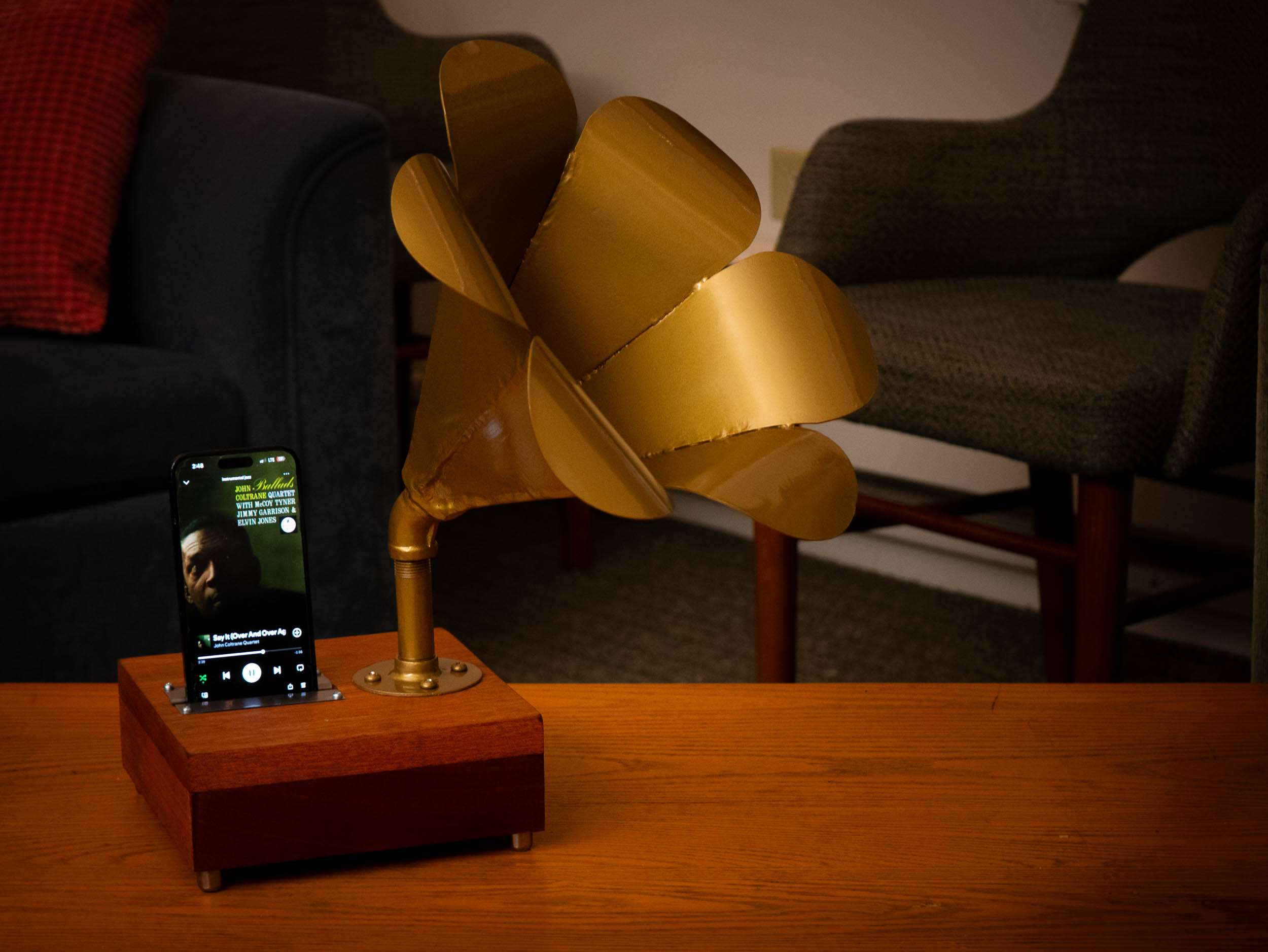
This project set out to build a fully passive speaker — no electronics, no amplifier, no battery — that uses acoustic horn geometry alone to project and warm up smartphone audio. The gramophone form factor was chosen deliberately: it’s a mechanical solution to an acoustic problem, which made it a good vehicle for practicing the entire product development loop, from sketch to finished object.
Design Challenge
The core challenge was geometric: horn shape, throat diameter, and bell expansion rate all affect how sound couples out of a phone speaker and into the room, and there’s no shortcut around getting that geometry right by hand and by iteration. The project also needed to work as a physical object — something that could sit on a desk, hold up to daily handling, and look intentional rather than improvised.
Constraints
- No electronic amplification — output level and tone had to come entirely from horn geometry and material choice.
- Fabrication limited to accessible shop tools (laser cutter, sheet metal brake, welder, manual lathe).
- The design needed to accommodate a phone cradle without a fixed, single-device mounting scheme.
- Keep BOM under $100.
Engineering Process
Concept Development
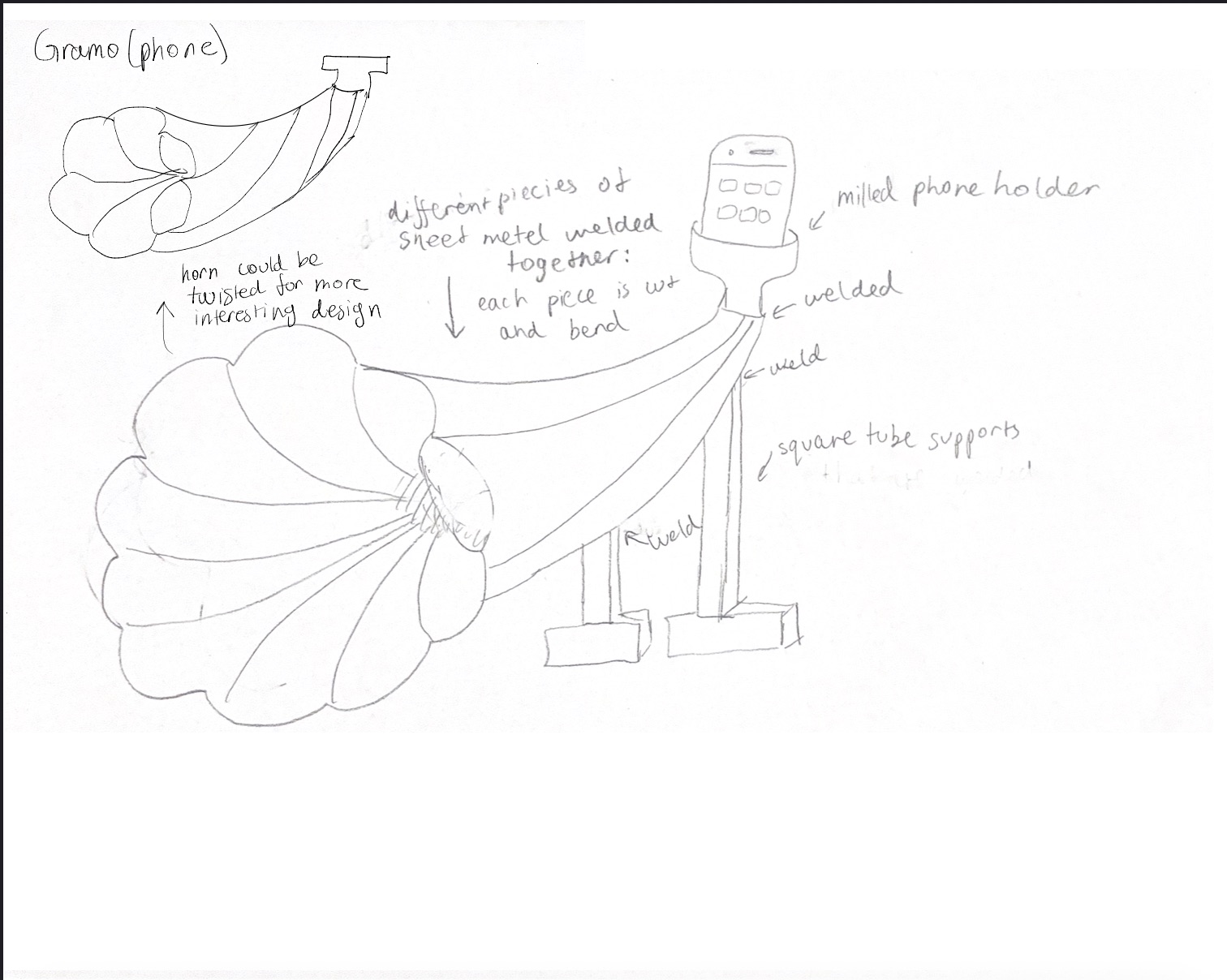
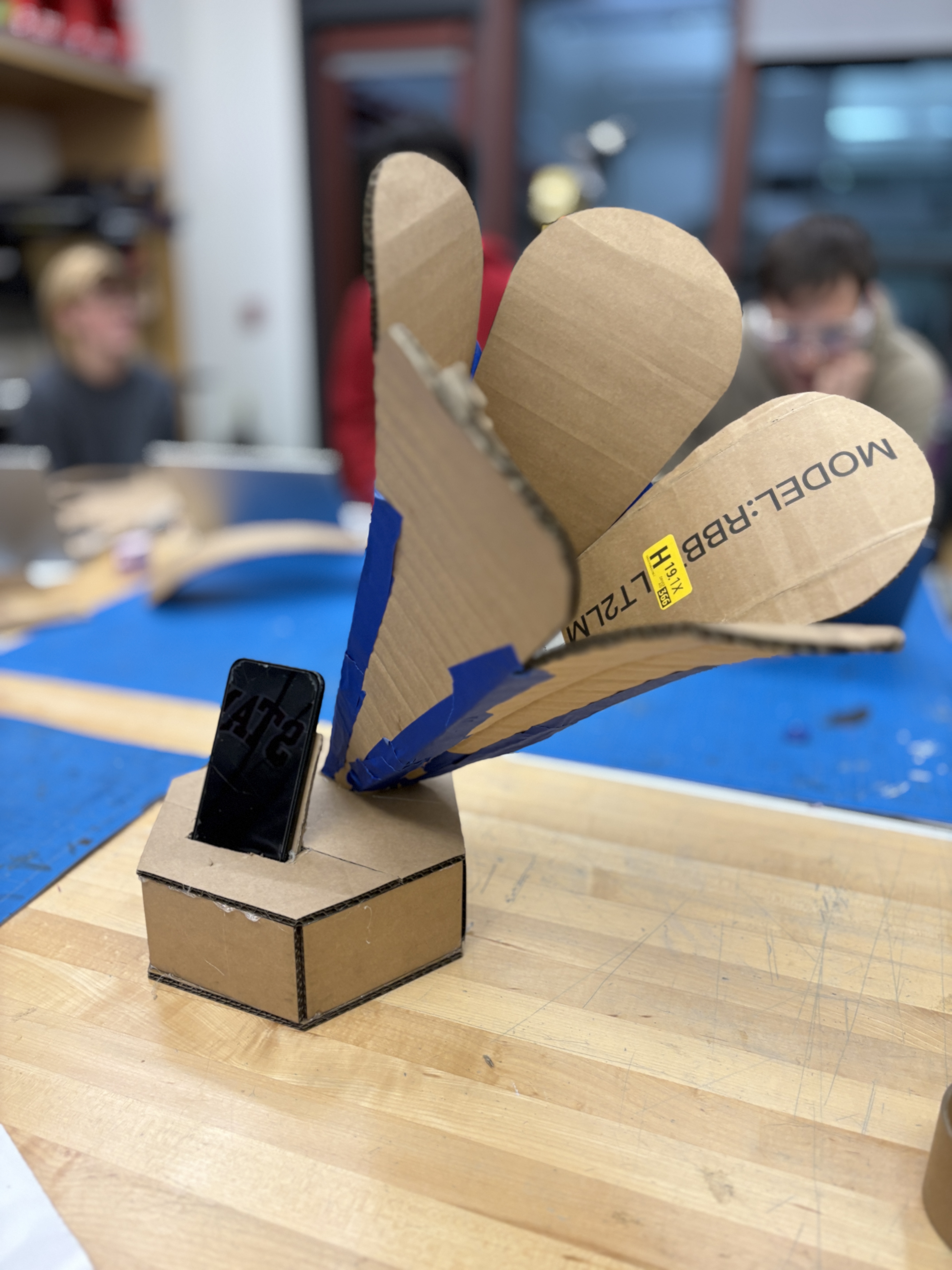
Early development started with sketching a range of horn and base forms, weighing classic gramophone proportions against a more compact desk-object scale. Sketches were used to settle on a horn profile and overall footprint before any CAD work began.
CAD and Analysis
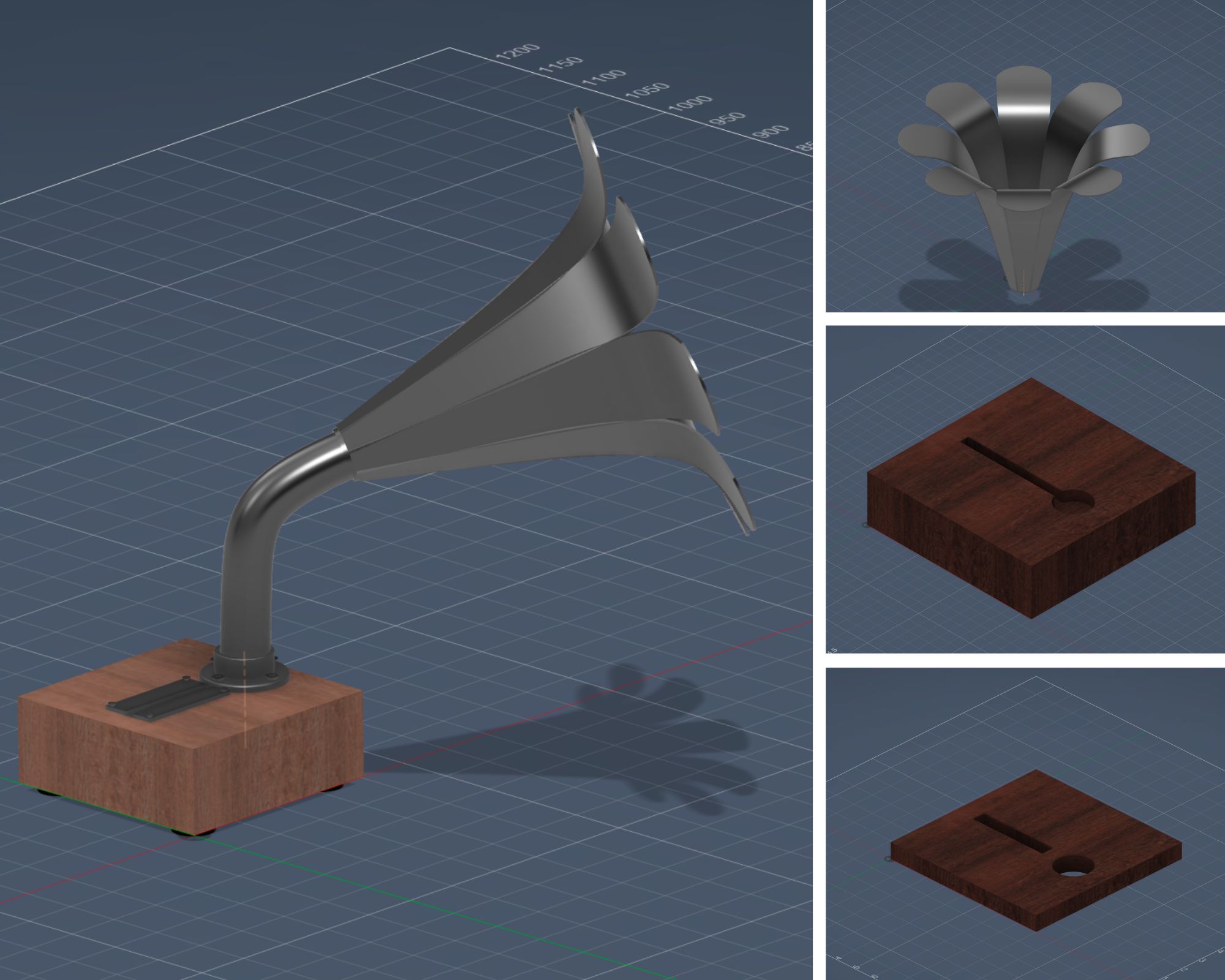
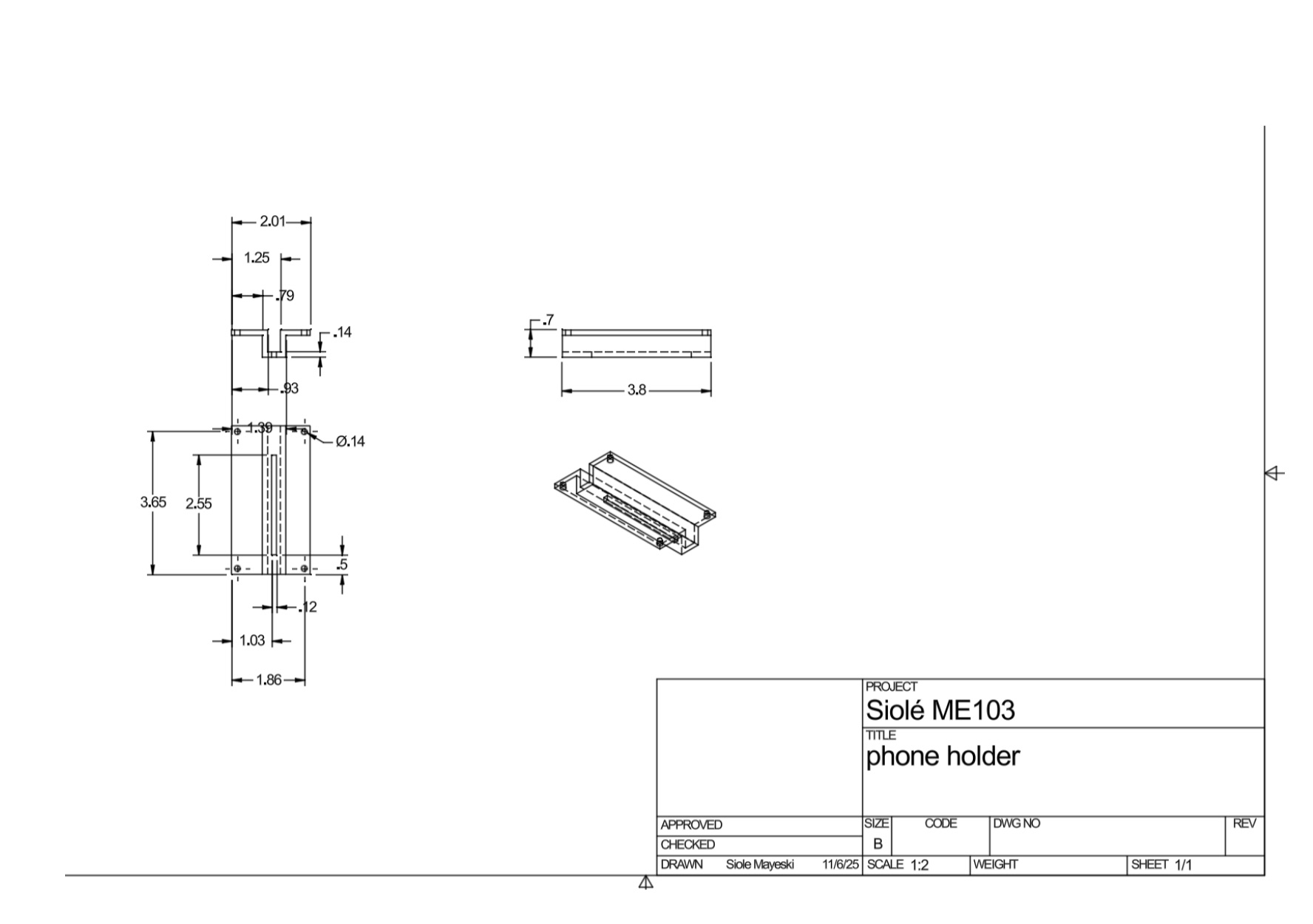
The horn, base, and phone cradle were modeled in CAD to work out horn expansion, wall thickness, and how the sheet-metal horn would unroll into a flat pattern for fabrication. CAD also served as the reference for laser-cut templates and lathe-turned components.
Material and Component Selection
Sheet metal was selected for the horn body for its formability and acoustic character, with wood used for the base for weight, stability, and finish. Material choices were driven by what could be shaped accurately with the tools on hand and by the acoustic and aesthetic qualities of each material.
Fabrication
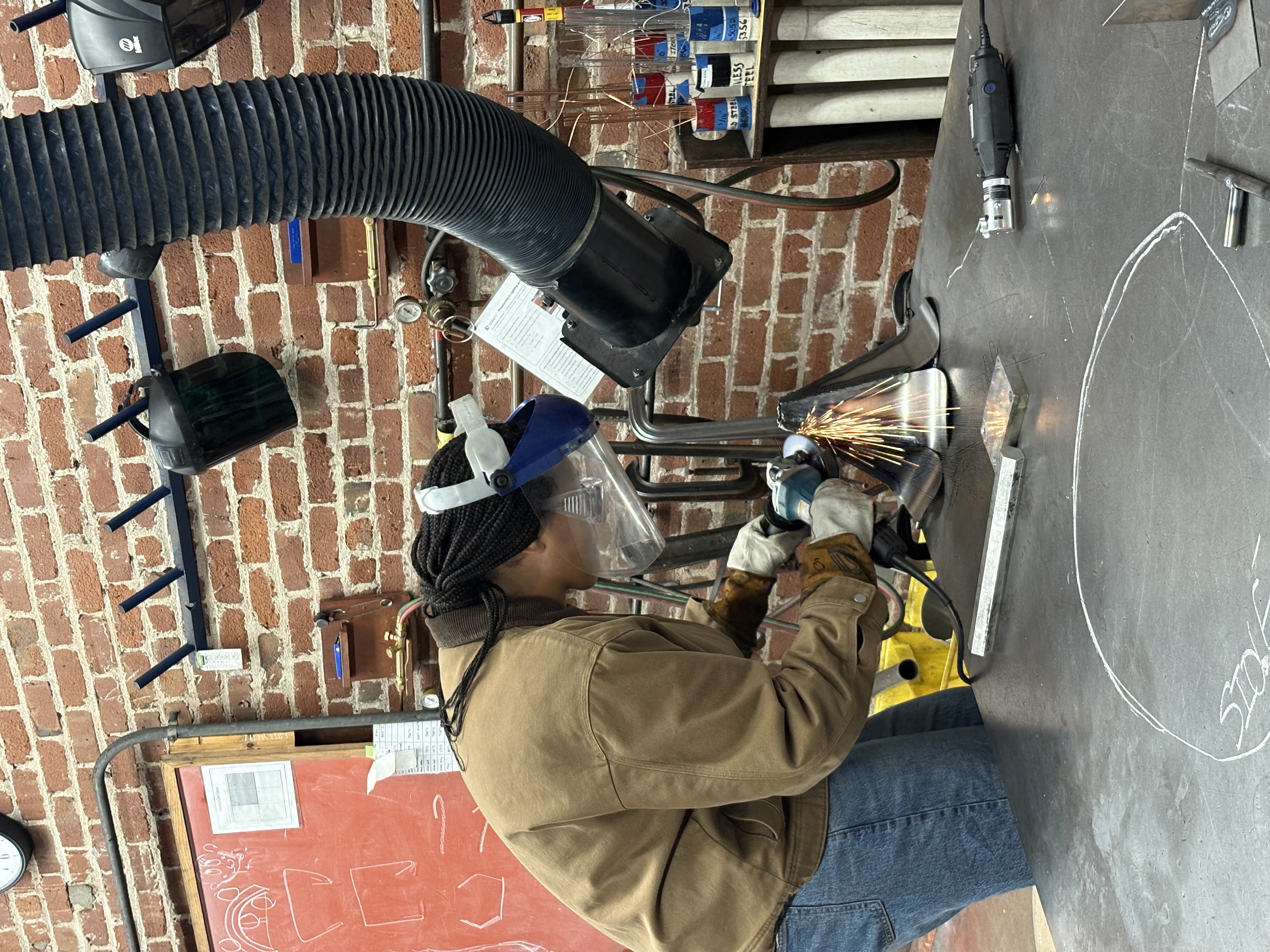
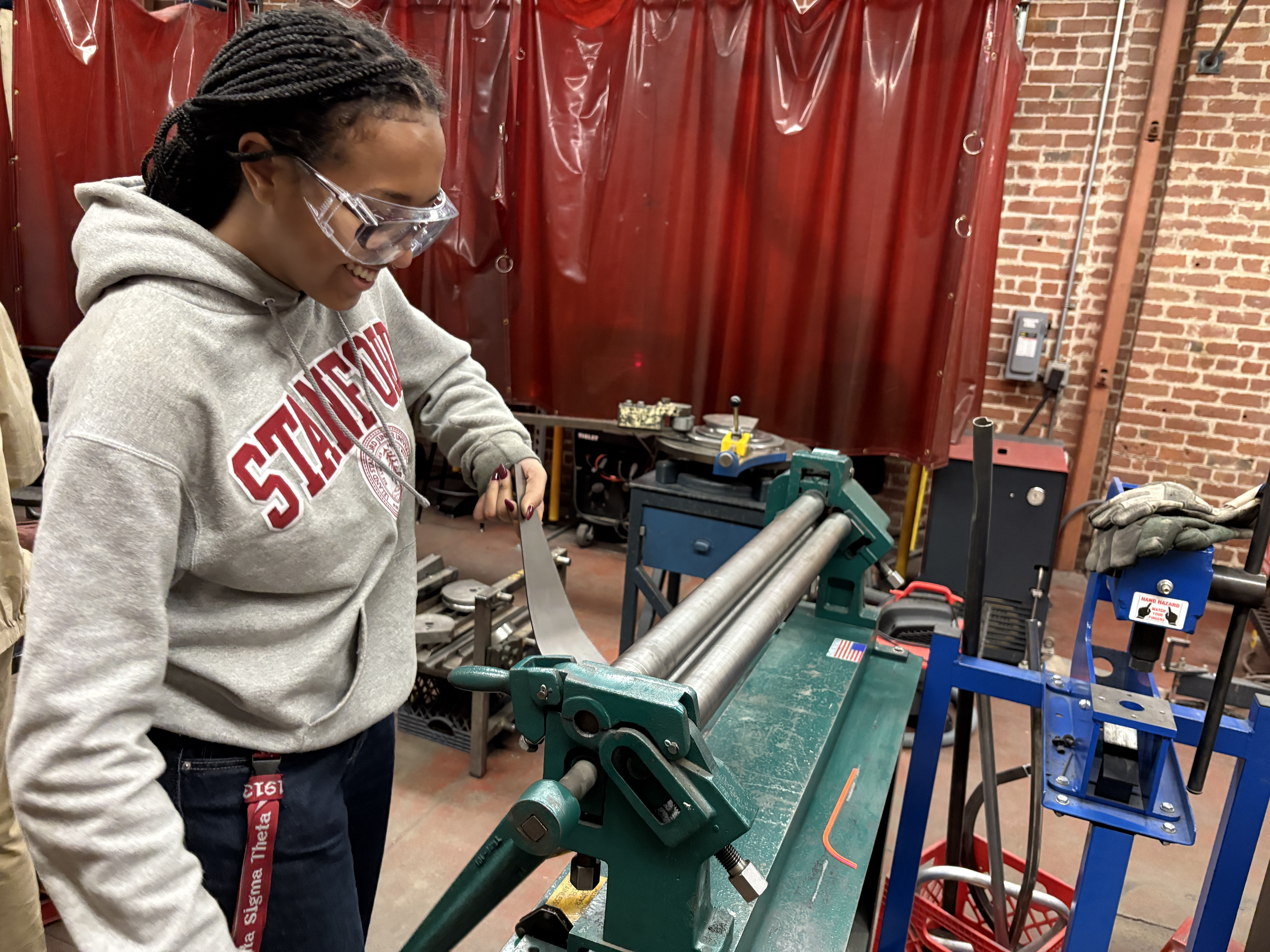
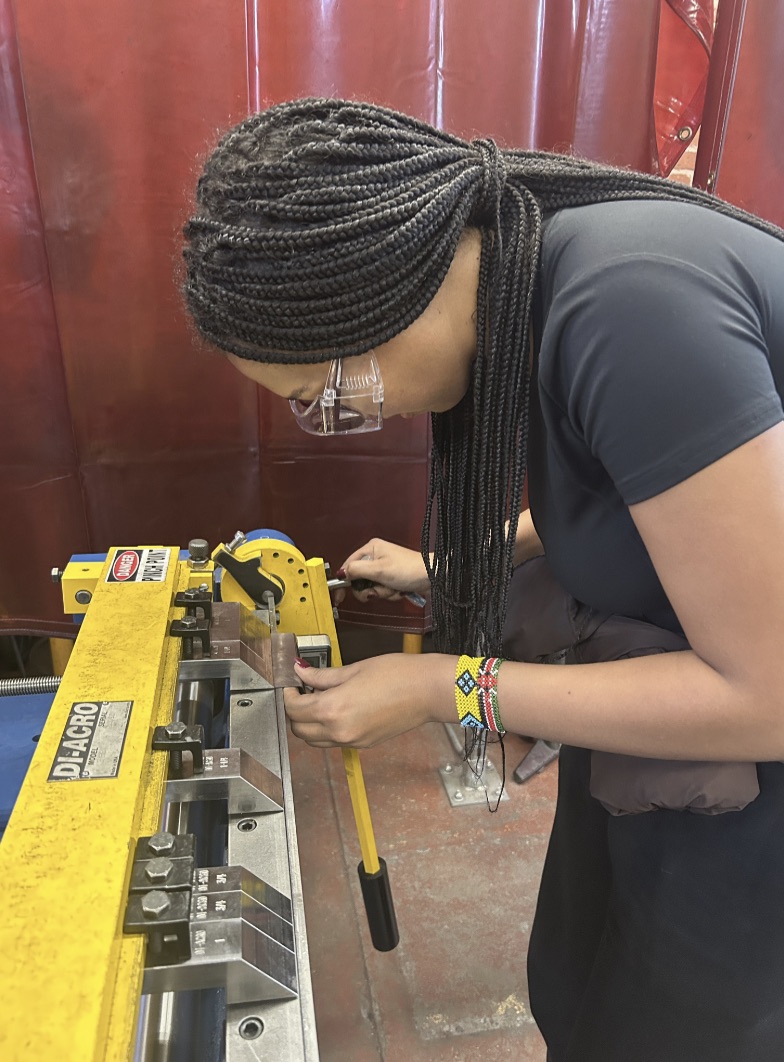
The horn was laid out from the CAD-derived flat pattern, cut, bent, and welded into its final conical form before being ground and polished to create a seamless finish. The base was constructed using standard woodworking joinery, with a router used to carve the internal audio transmission channels and the pocket for the phone cradle. Metal feet were fabricated from steel rod by cutting, turning on a lathe, and tapping threads before being screwed into the underside of the base. Finishing included spray-painting the metal horn and applying a protective wood finish to the base.
Testing and Validation
The assembled speaker was tested with a range of source material to check horn coupling, tonal balance, and mechanical fit of the phone cradle.
Results
The final gramophone successfully met the primary design objectives by passively amplifying sound from a smartphone without the use of electronics while maintaining an aesthetically refined appearance. The steel horn effectively projected audio through the routed acoustic channel, and the hardwood base provided stability while complementing the industrial design of the horn. The integrated phone cradle offered convenient access to the device, demonstrating how thoughtful integration of acoustic, mechanical, and manufacturing considerations can produce both a functional and visually compelling product. Today, the finished gramophone sits on my desk, where I still use it to play music—a reminder that well-engineered products can be both practical tools and objects people enjoy using every day.
Lessons Learned
This project reinforced the importance of designing with manufacturing constraints in mind and adapting designs as fabrication challenges arise. Producing the horn required careful control of welding distortion, precise fit-up, and extensive finishing to achieve a clean final appearance, while the woodworking operations highlighted the value of planning machining operations and assembly early in the design process. The experience also emphasized the iterative nature of engineering design, as components such as the base and support feet were refined to improve manufacturability, structural stability, and overall product quality.
Tools and Methods
CAD · Laser cutting · Sheet-metal bending · Welding · Lathe machining · Tapping · Metal grinding and polishing · Woodworking · Spray painting · Wood finishing · Acoustic material selection · Prototype testing
Gallery