Product Design
2025
Mechanically Actuated Timepiece
A gravity-powered mechanical clock that conveys time through a Rolodex-inspired display
Overview
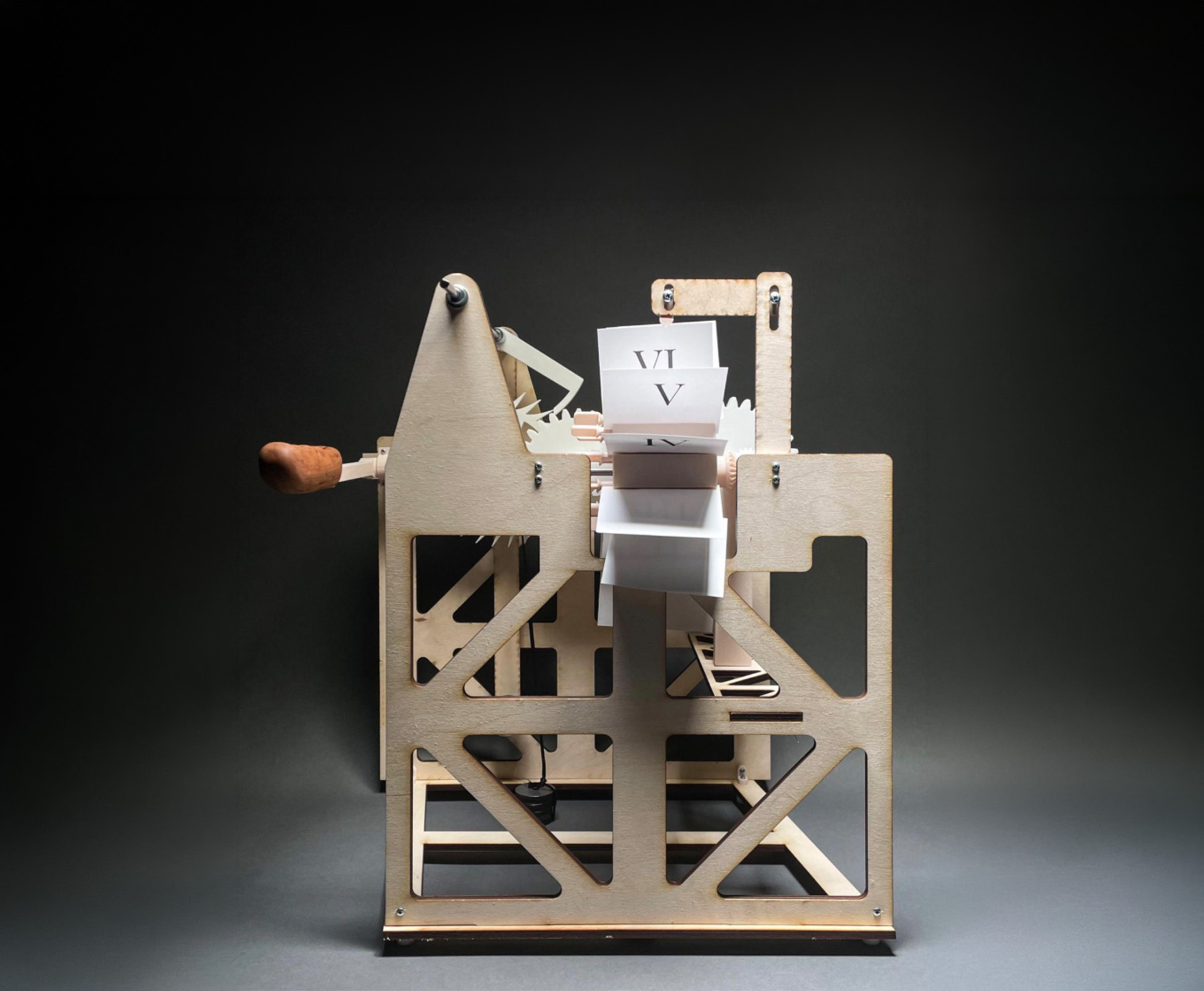
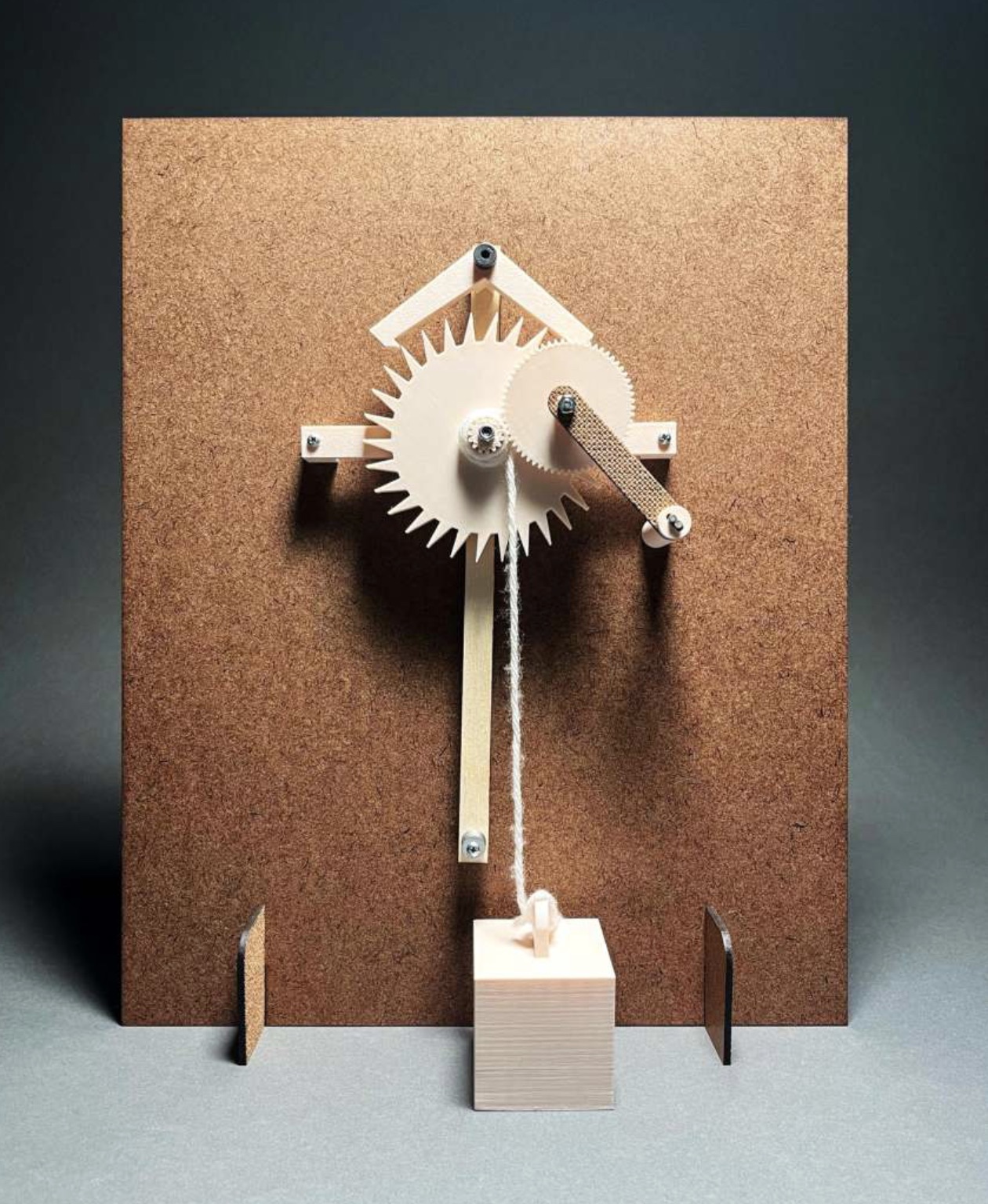
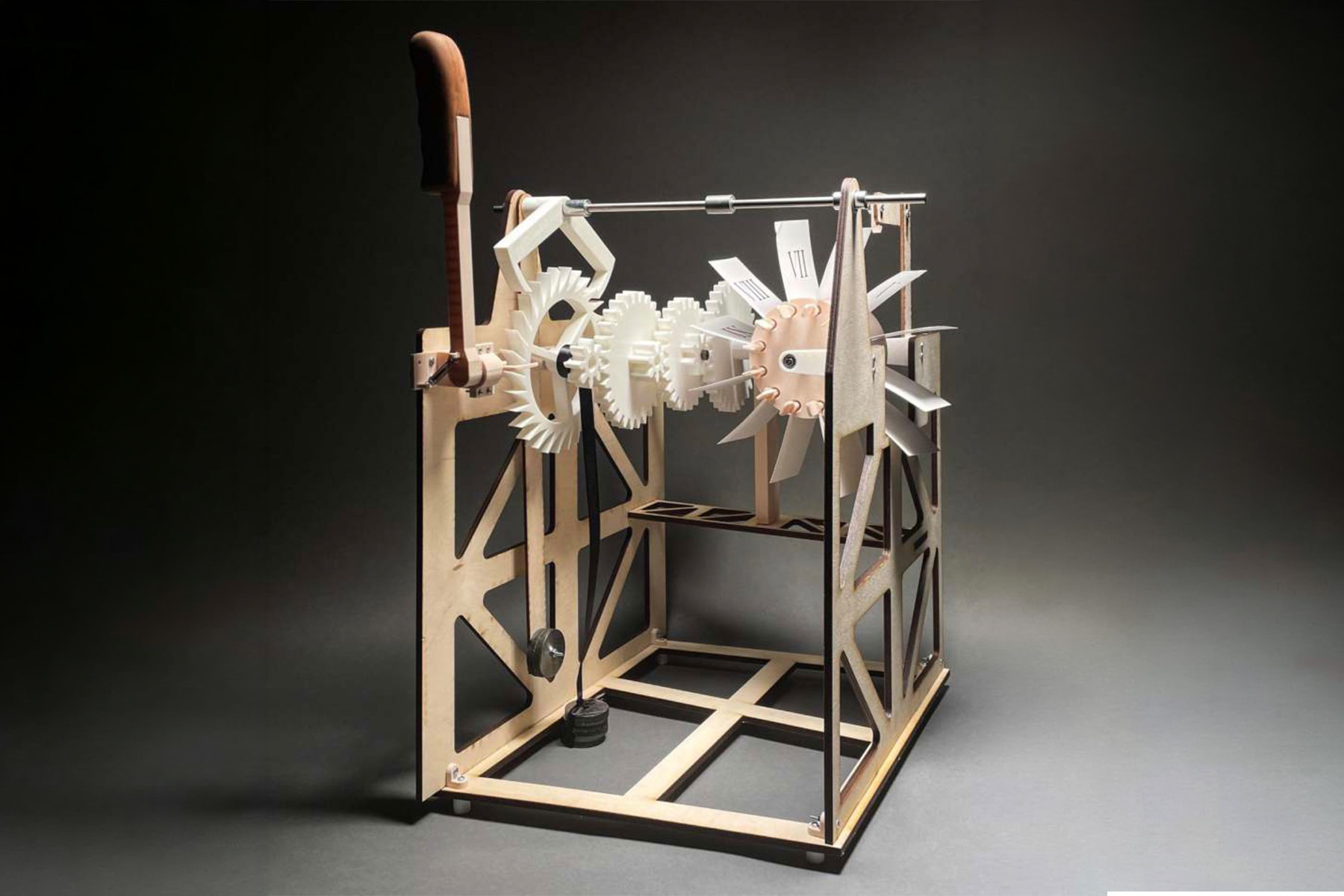
This project challenged our team to design and build a completely mechanical timepiece that communicates time through a rotating Rolodex of customizable index cards rather than traditional clock hands. Powered solely by gravity, the device transforms stored potential energy into precisely regulated motion using an escapement mechanism and multiple gear trains, completing one full revolution every hour.
Beyond functioning as a clock, the project explored the principles of optimizing multiple mechanisms into a cohesive machine while emphasizing craftsmanship, mechanical elegance, and visible motion.
Design Challenge
The primary challenge was integrating several independent mechanisms into a single reliable system. The design needed to convert gravitational potential energy into controlled rotational motion while maintaining consistent timing despite friction, manufacturing tolerances, and structural deflection.
Equally important was designing a machine that celebrated its mechanisms. Rather than hiding the moving components, the gear trains, escapement, and rotating display became defining visual features of the final product.
Constraints
- No electronic actuators — we used gravity as the sole power source.
- Complete one full Rolodex revolution every hour.
- Manufacture using available makerspace tools and materials.
- Incorporate multiple force and motion transformations into a single integrated machine.
Engineering Process
Concept Development
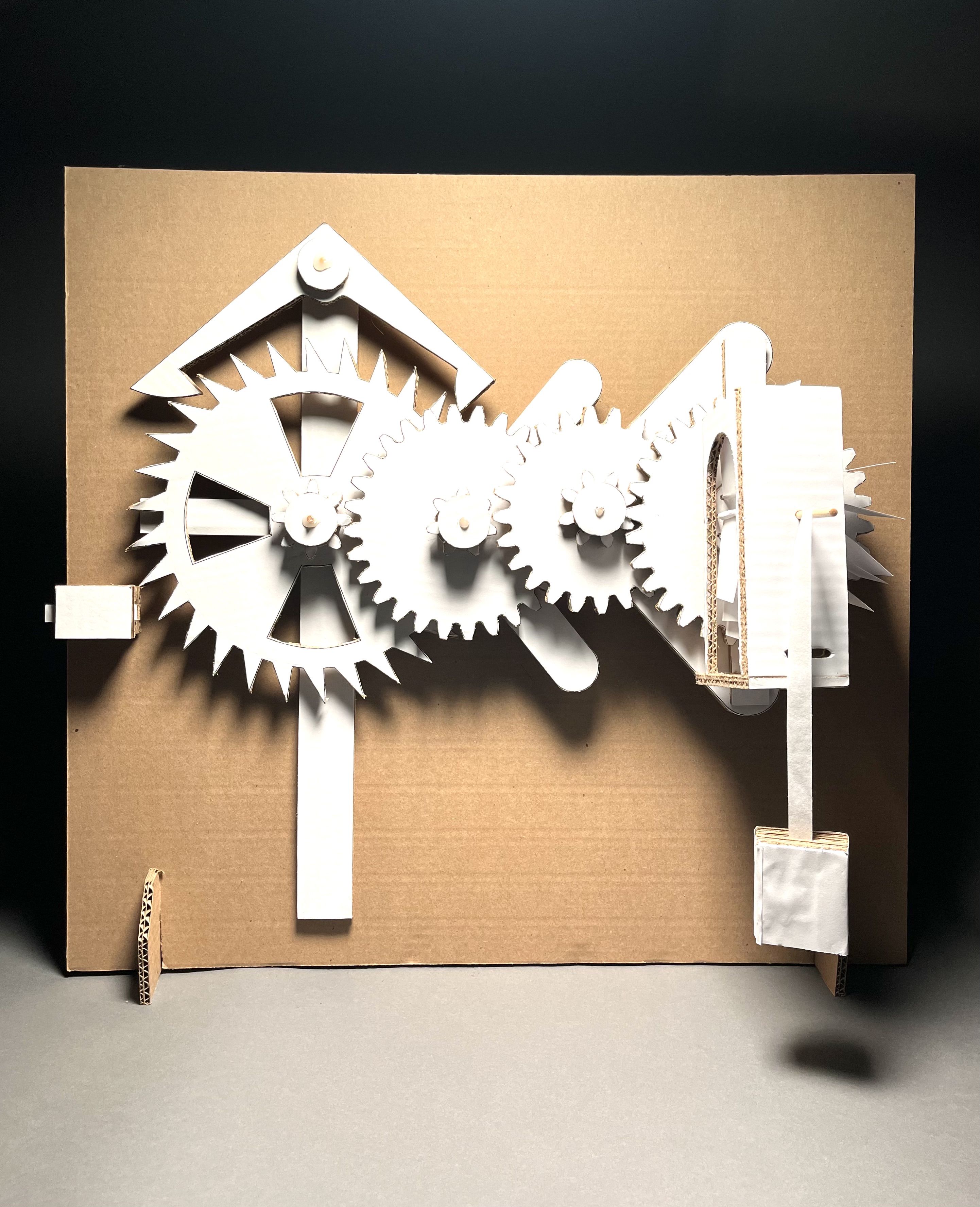
The project began with several rounds of iterative concept generation using the MEDGI Chain design methodology. Individual concepts were combined and refined over multiple iterations before converging on a final architecture centered around a gravity-powered escapement driving a gear train and rotating Rolodex display.
Early system-level planning included developing a functional block diagram that mapped the transformation of force and motion throughout the entire machine, from user input and gravitational power to the rotating display.
CAD & Analysis
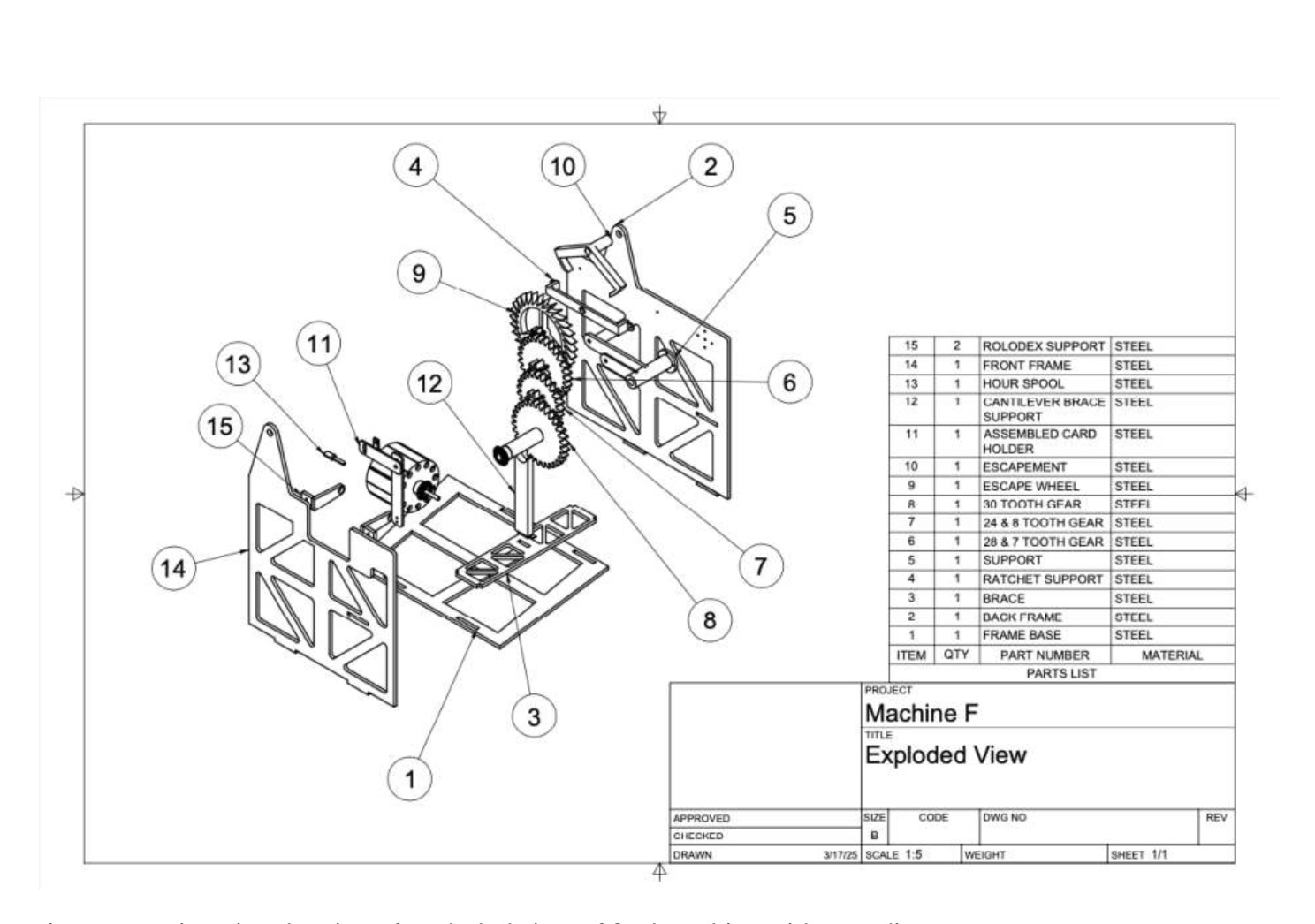
The complete assembly was modeled in Fusion 360 to establish the overall machine layout, refine gear placement, and verify clearances between moving components. Finite element analysis guided the redesign of the frame, replacing the original cantilevered structure with a more rigid base reinforced by braces and truss features. Force analysis throughout the mechanism helped estimate torque requirements and informed revisions to the counterweight, pendulum, and gear train.
Material and Component Selection
Birch plywood formed the primary structure due to its strength, manufacturability, and dimensional stability, while PLA was used for rapidly iterating custom components. Steel hardware, springs, and laser-cut steel weights completed the mechanism, with materials selected based on the demands of each subsystem and the manufacturing processes available.
Fabrication
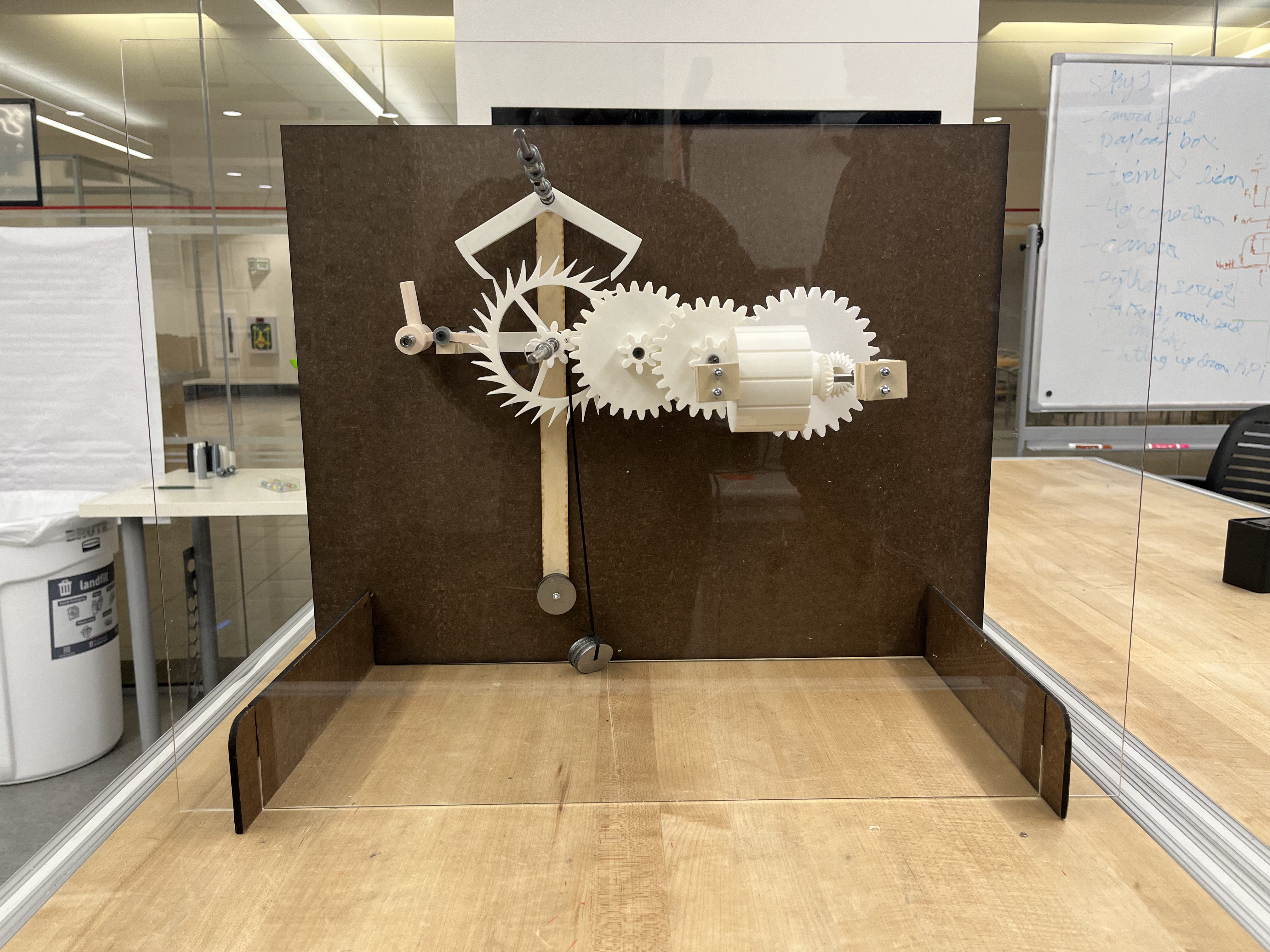
The prototype combined laser-cut plywood, 3D printed components, machined hardware, and custom-fabricated assemblies. Primary manufacturing processes included laser cutting, 3D printing, Drilling, Sanding, and Rotary tool finishing.
Testing and Validation
The machine combined laser-cut structural components, 3D printed mechanisms, and off-the-shelf hardware into a fully assembled prototype. Fabrication included laser cutting, drilling, sanding, and hand assembly, with multiple iterations produced as individual mechanisms were refined and integrated into the complete system.
Results
The final timepiece successfully demonstrated a fully gravity-powered mechanical clock that communicates time through a rotating Rolodex display. The redesigned frame improved structural stiffness while reducing unnecessary material, and the refined escapement and gear train operated more reliably following multiple rounds of analysis and prototyping. The project brought together mechanism design, structural optimization, force analysis, CAD, rapid prototyping, and manufacturing into a cohesive mechanical system that transforms simple gravitational potential energy into precisely regulated motion.
Lessons Learned
This project reinforced the importance of iterative engineering design. While analytical calculations provided a strong starting point, physical prototypes revealed challenges—including friction, compliance, and manufacturing tolerances—that were difficult to predict analytically. Combining simulation with hands-on testing produced a significantly more robust final design and highlighted how system-level performance depends on careful integration of every individual mechanism.
Tools and Methods
Fusion 360 · Mechanical system design · Mechanism design · Escapement design · Gear train design · FEA · Force analysis · Laser cutting · 3D printing · Drill press · Sanding · Hand fabrication · Mechanical assembly
Gallery